Sunday, September 20, 2015

M*A*S*H: Re-visiting a TV Classic

When I was in junior high, most of my friends looked up to rappers like Eminem and 50 Cent, or basketball players like Allen Iverson and Kobe Bryant. My hero was Hawkeye Pierce.


As far back as I can remember, M*A*S*H has been a part of my life. It's on TV in my earliest memories, and it continues to be quoted frequently whenever my family gets together. My parents were born in 1958 and 1964, respectively, and came of age during the show's eleven-year run. It was a staple of their childhoods, and they made it a staple of mine through re-runs on Fox and various cable channels. In my early teenage years, the show's anti-authoritarian element really clicked with me. It was no longer a show I watched with my parents. It was my thing.  I had a lot of friends in middle school, but I couldn't really relate to them. They were all gearing up to be jocks in High School and I was the awkward non-athlete of the bunch who would much rather watch the Marx Brothers or Monty Python than Sports Center or MTV. The ages of 12 to 15 are a rough time. You go through puberty, you fumble through learning how to interact with your crushes, you're constantly trying to act cool without the slightest idea of what "cool" is. And when you're going through all that, and you can't even relate to your closest friends, it leaves a void inside you. For whatever reason, M*A*S*H filled that void for me. Every day I'd come home from school, grab a snack from the fridge or pantry, and flip on the TV to watch M*A*S*H reruns on FX from 3 to 5. For me, M*A*S*H was more than an escape. It was my introduction to righteous rebellion, honest empathy, and the notion that the strongest bonds are forged in blood. And it was funny. More importantly, it was funny to me and not to my friends. Sometimes it bothered me that my friends didn't have the cultural foresight to appreciate humor not of their generation, but most of the time it made me feel good to be the only one in on the joke, like I knew something that they didn't.

For those of you who only know M*A*S*H as that "army show" your grandpa or uncle or dad used to watch, here's a quick primer of the whole franchise to put us all on equal ground moving forward:

MASH movie
Donald Sutherland and Elliot Gould in MASH (1970)
Before M*A*S*H was a TV show, it was a novel by Richard Hooker, based on his experiences as a surgeon in a Mobile Army Surgical Hospital during the Korean War. In 1970, the book was adapted into what is now considered one of the most groundbreaking American films of all time. Directed by Robert Altman, MASH stars Donald Sutherland as Benjamin Franklin 'Hawkeye' Pierce, Elliot Gould as Trapper John McIntyre, and Tom Skerrit as Duke Forrest; a trio of army doctors at the 4077th M.A.S.H. who deal with the insanity of war and military bureaucracy through playful anarchy, mischief, and humanity. The film's anarchistic, yet humanitarian take on government apathy and the horrors of war made it a breakout hit among the Vietnam War generation, and sparked a new era of American film-making.

M*A*S*H Season 1 Cast
M*A*S*H Season 1 Cast Photo
In 1972, M*A*S*H was adapted into a TV series starring Alan Alda as Hawkeye and Wayne Rogers as Trapper John (Tom Skerrit was invited to reprise his role for the series, but turned it down). Despite a first season low ratings, CBS approved a second season and the show became a cultural phenomenon. And though significant cast changes would occur after its third year, M*A*S*H ran for 8 more seasons, it's final episode (aptly titled "Goodbye, Farewell, and Amen") still holding the record for the most watched television episode in American history.

M*A*S*H began streaming on Netflix earlier this year. Since syndication airings of the show have dwindled to practically nothing over the years, it's been ages since I watched an episode beyond the first two seasons (which I own on DVD). So I started watching the show from the beginning a few of months ago and just finished the whole thing last week. Re-watching M*A*S*H in its entirety gave me a fun opportunity to look at the show with a critical eye for the first time. For all who might be interested in the ramblings of a devoted M*A*S*H fan, here are my critical observations at the end of a lengthy Netflix M*A*S*H-a-thon:

McLean Stevenson, Alan Alda, Wayne Rogers
and Loretta Switt

  • The first three seasons of M*A*S*H have always been my favorite, and after re-watching the whole series, they still are. There's just something about the quality of the writing, the balance between comedy and drama, and the original cast that's nothing short of lightening-in-a-bottle. In one corner you have Hawkeye and Trapper John, the dynamic duo of gin-guzzling, prank-pulling surgeons whose mutual dedication to saving lives is the only thing bigger than their appetite for anarchy. In the other corner you have Majors Frank Burns (Larry Linville) and Margaret 'Hot Lips' Houlihan (Loretta Swit), a pair of sniveling army brat antagonists whose laughable love affair makes for some of the biggest laughs of the series. Stuck between these opposing forces are Col. Henry Blake (McLean Stevenson) and his faithful company clerk, 'Radar' O'Reilly (Gary Burghoff—the only cast member to reprise his role from the film). As the 4077th's bumbling commanding officer, Col. Blake is arguably the most beloved character of the series, while Radar fills out the cast dynamic with endearing naivete and childlike innocence. Though Alan Alda became the show's true star early on, it's the ensemble that carries the show forward with brilliant comedic chops. As a befuddled Army bureaucrat points out in the Season 2 opener "Divided we Stand",  "These impossible people are in an impossible place doing totally impossible work. They're mad, quite mad, all of them, and the only thing I can think of that would be madder still would be breaking them up." As fate would have it, the original cast would be broken up after the third season, and the show would never quite be the same. Instead, it would change to meet the demands of new cast dynamics and break new ground in telling deep, thoughtful stories on television—the best possible outcome given the magic of those golden early years of the series.

  • Of all the cast changes M*A*S*H would go through over the course of it's decade-long run, none were more profound than the loss of both McLean Stevenson and Wayne Rogers between Seasons 3 and 4. After McLean Stevenson announced his departure from the series, the shows producers decided that Col. Blake would be discharged from service, only to be killed after his plane home was shot down over the sea of japan. The loss of such a beloved character was an enormous blow to the series and to its fans, but the decision to take this loss and turn it into something so brutal and honest was a stroke of genius. Despite the disorderly antics and hilarious hi-jinx that made the show special, M*A*S*H demonstrated early on that it would pull no punches in portraying the senseless loss of life that inevitably comes with war.  

Radar informs the camp of Col. Blake's death:

Wayne Rogers as Trapper John

  • Wayne Rogers' departure from the series was less impactful, though equally profound. Having originally planned to return for the fourth season, Rogers dropped out abruptly due to contract disputes and an ongoing dissatisfaction with his supporting role to Alda. Thus, Season 4 opens with Hawkeye returning from R&R in Tokyo to discover that Trapper was discharged and left for home in his absence. I've always thought it was a shame that Rogers left the show when he did. Trapper John may have often played second-fiddle to Hawkeye, but the "partners-in-crime" dynamic between the two characters was in many ways the backbone of the series. Nearly every episode contains moments—both comedic and dramatic—where Rogers' charmingly rugged presence makes for a perfect yin to the yang of Alda's rye energy. And where Hawkeye is combative and narcissistic at times, Trapper is a bit more rash and laid-back. It's interesting to think about what might have happened if Rogers had stayed, and how Trapper John might have developed as a character throughout the shows remaining 8 seasons.

Alan Alda (Hawkeye), Mike Farrell (B.J. Hunnicutt) and Harry Morgan (Col. Potter)

  • Season 4 ushers in two new cast members (Harry Morgan as the new C.O., Col. Sherman Potter, and Mike Farrell as B.J. Hunnicut, Hawkeye's new bunkie and confidant) that dramatically shift the dynamic of the ensemble and contribute heavily to the evolving tone of the series. Both characters enter the scene as vital departures from their predecessors. Potter never fills Col. Blake's shoes. Instead, the character develops a special place of his own in the series with his prickly-but-lovable demeanor, temperate leadership and old-timey cadence. Likewise, B.J. Hunnicutt is a far cry from Trapper John's devilish rogue. Where Trapper's family life back home does little more than provide a darkly comedic framing for his many infidelities, B.J.'s separation from his young wife and newborn daughter takes up a lot more dramatic real estate. Growing up I was never a big B.J. fan. I found the whole brooding-nice-guy thing to be exhausting. In hindsight, I guess my dislike for B.J. was largely due to my family's loyalties to the original cast (We even used B.J. as a marker for when the series lost it's savor: "M*A*S*H stops being funny when B.J. grows a mustache." we used to say). But after re-watching the whole series, I now see B.J.'s narrative arc as a deeply moving, integral part of M*A*S*H's dramatic accomplishments. B.J. is a family man in every sense of the word. He's come to conceptualize his family as the best part of himself, and leaving them behind brings out the worst in him the longer he's away from them. The best he can hope for is to do as much good as possible while he's in Korea so he can return home with some sense that it was all worth it (a feeling any war veteran will surely relate to). Mike Farrell plays B.J. with commitment, warmth, and rage—taking what might otherwise have been a placid character and turning him into a tepid, complex animal.

  • Despite the sudden cast-change—or, perhaps because of it—M*A*S*H's fourth season also marks a sort of creative peak for the series. When it isn't devoting time to working out how the new cast members function within the ensemble, Season 4 successfully executes solid comedy on par with the previous seasons while digging deeper into the drama of the show's premise. The best example of this is "The Late Captain Pierce", in which Hawkeye discovers he's been declared dead by the army in a paperwork mix-up. Hawkeye takes advantage of the situation in good humor at first, using his deceased status as an excuse to get out of camp responsibilities. But he becomes increasingly incensed when his "death" halts his pay and security measures for President-elect Eisenhower's visit to Korea prevent him from being able to contact his father. Eventually Hawkeye accepts his fate and decides to desert the 4077th and go home AWOL—only changing his mind as a new batch of wounded is brought in from the front. "They'll come whether I'm here or not." he remarks. "Trapper went home and they're still coming. Henry got killed and their still coming. Wherever they come from they'll never run out." Death is the specter looming over this episode, over this season, and the entire series, but it all intersects at this point in Hawkeye's personal journey. He's exhausted from constantly facing death in the operating room. To make matters worse, the death of Henry Blake and the departure of Trapper John have pushed him into a whole new realm of personal loss. It's arguably the most poignant moment of the series, encapsulating the show's ability to take absurd, sometimes morbidly humorous situations and interweave them with life's most universal and tragic dilemmas. 

  • Season 4 also marks the first time that the showrunners experimented with series format. The Season 4 finale, "The Interview", takes the form of a black-and-white newsreel featuring interviews with the 4077th crew, each offering their own insight on the war and their place in it. This episode is significant because it set a new precedent for the series to have one or two experimental episodes per season. Such episodes include "Point of View", an entire episode shot from the point of view of a wounded soldier; "Life Time", in which an onscreen clock counts down the time B.J. has to replace a G.I.'s damaged aorta; and "Dreams", a famous episode where the dreams (mostly nightmares) of each primary cast member are shown throughout a day of heavy incoming casualties. Some of these episodes fare better than others, but the show's dedication to telling interesting stories and experimenting with form offers a sort of precursor to the type of innovative storytelling we get from TV today. 

Loretta Swit as Margaret Houlihan
  • Where Season 4 triumphs, Season 5 meanders. It's funny and heartfelt enough, but only manages to maintain a status quo for the series thus far. The most notable ongoing plot line of the season involves Margaret Houlihan ending her affair with Frank Burns to marry the accomplished Lt. Col. Donald Penobscot. Season 5 also marks the departure of Larry Linville from the series, who felt he had taken the character of Frank Burns as far as he could go. This was a smart move on Linville's part, whose hilarious and dedicated performance made Frank more a caricature of military lunacy than a three-dimensional human being that could evolve with the changing tone of the series. Margaret Houlihan, on the other hand, shows the first signs of evolving from an army brat/bimbo caricature into one of the strongest female characters in TV history. In "The Nurses"—perhaps the best and undoubtedly the most important episode of Season 5—Margaret reveals herself at her most vulnerable in a contentious run-in with her nursing staff. As they vocally object to her by-the-book command style, Margaret confesses the pain of her alienation from the rest of the nurses and they're failure to reach out to her. "Did you ever once offer me a lousy cup of coffee?!" she says. It's a powerful moment where the viewer is confronted with the pressure and loneliness of being a female officer in a man's army. Throughout the rest of the series, Margaret is confronted with a wide variety of personal challenges including divorce, sexual harassment, heartbreak, and constant disrespect from her male colleagues. At the end of it all, she emerges triumphant, and Loretta Swit imbues Margaret with warmth, power, sensuality, vitality, and authenticity every step of the way.      

  • In Season 6, Frank Burns is replaced by Chalres Emerson Winchester III (David Ogden Stiers), a stuffy Boston surgeon whose intellect and surgical aptitude make him a far more challenging frenemy for Hawkeye and B.J. In his first two seasons on the show, Winchester's presence at the 4077th breathes new life into the ensemble and gives the writers ample opportunity to tell more intriguing stories. Winchester's ongoing, desperate struggle to maintain his dignity under the horrifying conditions of the 4077th is one of the most compelling aspect's of M*A*S*H's latter half, largely due to Stiers' brilliant performance. Stiers may have been intimidated at the prospect of joining such a beloved cast of characters so late in the game, but as soon as he enters the scene he develops great chemistry with each of his fellow cast members. His chemistry with Alda is particularly fun to watch as their respective characters hash out a competitive tension over the course of Season 6. In the series finale, when the war is over and each character bids farewell to the 4077th, there is no exit more satisfying and poetic than Winchester's. As he says his reserved goodbyes to Hawkeye, B.J. and Col. Potter, motor pool sergeant Luther Rizzo shows up in Winchester's ride out of camp: a grimy old garbage truck. "What better way to leave a garbage dump." Winchester says as he saunters over to the truck with his nose in the air. It's a fitting farewell for a man whose journey through hell may have hurt his pride often, but never stole his dignity.
David Ogden Stiers as Charles Emerson Winchester III

  • Over the course of the series, there are two secondary characters that become much-loved principles: army chaplain Father Mulcahy (William Christopher), and the dress-wearing, Section 8-hunting Corporal Klinger (Jamie Farr). My most recent viewing of M*A*S*H was the first time I considered how offensive a character like Klinger might be to a modern audience. A man who wears dresses to get thrown out of the army might have been funny in the 70's, but would the joke be completely unfunny in light of today's gender politics? Surprisingly, I found that the dress shtick holds up pretty well, but solely due to Jamie Farr's warm, nuanced, and almost vaudevillian approach to the material. Farr is a comedic talent of a bygone era, and it's his fast-paced, tongue-in-cheek delivery that makes Klinger work as a character, even when the dresses get old. When Radar leaves the show in Season 8, Klinger is appointed the new company clerk and ditches the dress-up gag for good, giving Farr the chance to add new dimensions to the character and show audiences that his talent reaches much farther than looking funny in a dress.


  • I had forgotten the extent to which the specters of Henry Blake, Trapper John, and other departed characters haunt M*A*S*H's later years. Where other sitcoms of the '70's and '80's fall into the trap of retroactively erasing the presence of a departed character altogether, the writers of M*A*S*H do well to remind the viewer of their losses, and the remaining characters of the friends they had to say goodbye to. In the latter half of the series, Hawkeye in particular shows signs of deep emotional scars left by the trauma of Henry's death and Trapper having left without saying goodbye. The longer Hawkeye is trapped in this war-torn purgatory, the more deeply he feels the loss of his friends. The older I get, the more relatable this aspect of M*A*S*H becomes. We all lose friends and family, whether they move on to other places, or they literally move on from this life. It's all painful to some degree or another, and dealing with the loss is always a struggle.

  • The drama in M*A*S*H is always more successful when the comedy is good. I used to think that the show lost steam in the last three or four seasons because there was too much drama and not enough comedy. Upon re-watching, however, it's clear to me that  M*A*S*H's dramatic moments account for much of the best writing, acting, and directing of the later seasons. Its obvious that everyone involved in the latter half of M*A*S*H's run was deeply committed to exploring war's psychological and emotional blows. Perhaps this is why they kept going as long as they did. Unfortunately, the drama—no matter how painstakingly executed—falls flat when the comedy isn't fresh. M*A*S*H's later years do have their funny moments, but nothing as crisp, brash, or timeless as the comedy of its early-to-middle years.  

  • M*A*S*H may have run one or two seasons too long, but there's no denying that the two-hour finale, "Goodbye, Farewell and Amen", remains an undeniably powerful work of television. Written and directed by Alan Alda (with the input of just about every major writer of the entire series) "Goodbye, Farewell and Amen" strikes a highly effective balance between constructing a palpable story of war & loss and hitting all the necessary beats for a satisfying ending.

Hawkeye and B.J.: The Last Goodbye


As a time-honored work of exceptional television, M*A*S*H stands as a testament to the power of a medium that our culture has taken great advantage of in recent years. We love television today for its ability to tell human stories in long form. At its best, this is what M*A*S*H was all about. On a personal level, re-watching M*A*S*H as a slightly older, more world-weary person has been a revelatory experience. Over the past year I've encountered family tragedy, financial uncertainty, crises of faith, and major life transitions. At the tail end of it all, reconnecting with M*A*S*H's much beloved characters—sharing in their struggles and their laughter—has been a great source of strength. It's often been said that, despite its Korean War setting, M*A*S*H is really a show about the Vietnam War. Cast and crew members have refuted this on a few occasions, stating instead that the show was about all wars. I would go one step further and say that the show is about all loss. As I've watched this 11-season story of tragedy and comedy from beginning to end, it's been both comforting and rewarding to find that bitter loss can be made more bearable when it is transformed into honest storytelling. And that is the big takeaway from M*A*S*H, an honest tale of the insanity we all endure together in the war against ourselves.


Monday, June 8, 2015

What No One Is Saying About Mad Max: Fury Road

Jasin Boland/Warner Bros.
By now you've probably heard that Mad Max: Fury Road is the best film of the summer, probably the best film of the year so far. You may have also heard that it turned a testosterone-driven franchise into what might be the greatest feminist action piece ever filmed.

The good news is, Mad Max: Fury Road is all of these things. It's so damn good, in fact, that it has infuriated men's rights dopes, impressed even the stuffiest critics, and successfully revived a bloody, R-rated '80's action franchise in the PG-13 superhero-saturated 21st century...all while upholding the unique western-hero-meets-leather-clad-post-apocalypse mythology that made Mad Max special in the first place.

Yes, Mad Max: Fury Road is a brilliant "feminist playbook for surviving dystopia", but it hasn't shed it's iconic western hero backdrop in order to be so. And that's a good thing.


The Mad Max franchise was born out of a time when the Western hero was being re-appropriated through what we now would call "genre mixing". The most iconic example is Han Solo, the resident space-western outlaw of Star Wars. Two years later, first-time Australian director George Miller would create a futuristic Western of his own, albeit a much more apocalyptic one. In the place of Harrison Ford's swashbuckling Han Solo we find Mel Gibson's unhinged Max Rockatansky, a road-Marshall-turned-anti-hero seeking vengeance for the death of his family in a future that looks and feels a thousand years behind our present. 


Mad Max's limited budget left it up to the viewer to fill in the blanks of the film's apocalyptic "wild west" outback; a world much more successfully fleshed out in 1981's The Road Warrior. With it's post-apocalyptic punk aesthetic, The Road Warrior created a new cinematic genre, but the film's archetypal Western tale of the hardened gunslinger helping the helpless and thereby reclaiming his humanity is the crux of the film's cultural success. In order to break new ground, it's often necessary to look inquisitively back to where you've been before. The brightest frontiers are successfully traversed with a winning blend of the old and the new. In the case of the original Mad Max trilogy, the Western hero needed to trade in a poncho for a leather jacket and a horse for a muscle car in order to survive. 

And in Mad Max: Fury Road, the Western hero must join forces with a Western heroin to survive the ongoing battle against the evil forces of hetero-patriarchy. At the beginning of the film, we find Max (now played by an extra-mad Tom Hardy) roaming the Wasteland as usual, until he is captured by the minions of Immortan Joe (Hugh Keays-Byrne), the tyrannical patriarchal leader of a civilization called the Citadel. Max escapes and eventually joins forces with Imperator Furiosa (Charlize Theron) to free Immortan Joe's slave wives and move on to greener pastures. 

It was the perfect move, really: re-re-branding the post-apocalyptic sci-fi Western into a feminist post-apocalyptic sci-fi Western. Critics and audiences alike have even argued that Furiosa is the protagonist of Mad Max: Fury Road while the titular hero takes a supporting role...but it's not quite as simple as that. If anything, the hero and heroin are co-leads in the picture. The girl power-driven plot and emotional crux of the film belong to Furiosa to be sure, but it is Max who remains the embodiment of rough-and-tumble Western heroism in a post-apocalyptic world--a world we know through his crazed eyes. 


Clint Eastwood and Lee Van Cleef in For A Few Dollars More (1965)
This isn't the first time that the iconic hero of a Western has taken a narrative passenger seat so another character can drive. Take a look at For a Few Dollars More, the second film in Sergio Leone's 'Dollars Trilogy'. The film stars Clint Eastwood and Lee Van Cleef as rival bounty hunters who eventually join forces in search of "El Indio", one of the most wanted fugitives in the Wild West. Though Eastwood receives top-billing in the film's promotional material and opening credits (as he does in the other two 'Dollars' films), the story really belongs to Van Cleef's Colonel Douglas Mortimer, who seeks "El Indio" in vengeance for raping and murdering his sister. Eastwood's 'Man With No Name' is originally looking for "El Indio" only for the bounty, but eventually helps Mortimer exact his vengeance, taking to the sidelines in the film's climax where Mortimer and "El Indio" stand off for the final showdown. Though Mortimer's vendetta ends up being the driving narrative force of the film, The Man With No Name remains the icon of the piece, as he does in the third film of the 'Dollars Trilogy', The Good, The Bad, and The Ugly (even when the camera shifts focus onto the other two leads). 


As a post-apocalyptic Western, Mad Max: Fury Road follows this same narrative pattern. Max's motivation, much like The Man With No Name, is survival. Furiosa's motivation, like Mortimer's, is personal vengeance against the forces of destructive masculinity. By drawing from the Western cinema that came before it, Fury Road allows it's titular hero and icon to sit shotgun so that the character who needs to be in the driver's seat can do so; thereby giving birth to the Feminist Post-Apocalyptic Western. Fury Road is what feminism should be all about. It shows us that patriarchal oppression is bad for women and men. And it works because the film doesn't abandon it's mythology in favor of politics. Instead, it re-appropriates the mythology in order to successfully present thoughtful, insightful, and helpful feminist ideas. The archetypal Western hero joins forces with the 21st century heroin, and everybody wins. 


In the wake of Fury Road's success, George Miller has promised more Mad Max films to come. It's not likely that every forthcoming chapter in the Mad Max saga will be a particularly feminist one, but that's probably ok. The franchise has already shown that it can take it's mythology and make something new, useful, and relevant. Here's hoping it continues to do so. 


Saturday, June 6, 2015

Welcome to Dante's Blue Jeans

A great and terrible scene from my favorite movie, Apocalypse Now


"I like beautiful melodies telling me terrible things." said Tom Waits of his craft. If you feel the same way, you've come to the right place. 

The name's Andersen. I'm a writer. And I'm writing this blog because I like beautiful melodies telling me terrible things. I love music, film, literature, art, and the occasional car commercial, because they tell me great and terrible things in great and terrible ways. My goal in writing this blog is simple: to turn people on to good shit. 

In the process, I also hope to do some good writing...if only to combat the bad writing that plagues the blogosphere. There's an eternal riptide of bloggers out there, blogging their obvious opinions and unoriginal ideas and reaching only those who agree with them; all without writing a single sentence of beauty, moxie, or style. 

And when the artist does something with style, with honesty, the bloggers respond with ridicule. Welcome to the future, where praise is reserved only for the artist who reflects the blogger's "ideals". "Pay your dues to the fashionable discourse or we'll shut you up real quick, by any means necessary." That's the game.

Nevertheless, good art and interesting ideas continue to slip through the cracks. And for me, there is no other way to get the word out than to do it with style. In the words of Charles Bukowski, "Style is the answer to everything."  

Whether or not I can do this thing with style is still a mystery. What I know I can do, though, is tell you about the work and ideas that I find beautiful. In the meantime, I've posted a few articles from my old blog so you can get a rough idea of what to expect in the future. So stay tuned, freak out, and keep looking for the dangerous things. 


Welcome to Dante's Blue Jeans

-Andy Andersen, June 6, 2015


Thursday, June 4, 2015

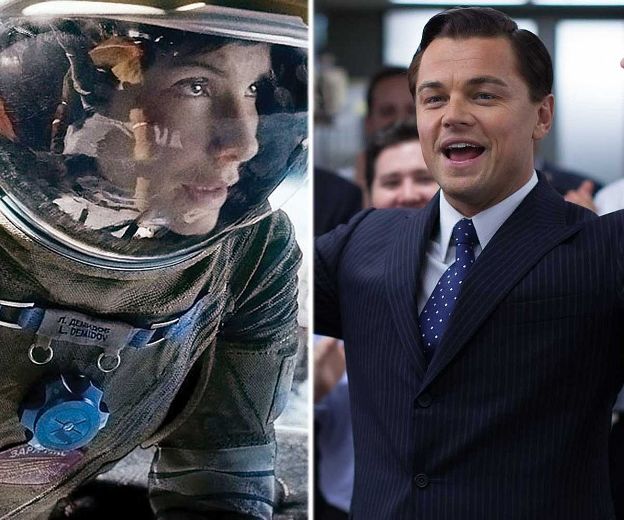
Post-Oscar Meditations: Why Gravity and The Wolf of Wall Street are The True Winners of 2013

Originally published on my old blog, "The Angry Fix", March 12, 2014

Every year after the Oscars, the nominated films seem to fall into two categories--those that won, and those that history will remember more favorably than the winners. Granted, some of the winners manage to fall into the second category as well, but more often they don’t. This year, the coveted Best Picture Oscar went to a film worthy of its prestige: Steve McQueen’s relentless historical drama 12 Years A Slave, while two other nominees--Alfonso Cuarón’s poignant cinematic space spectacle Gravity and Martin Scorsese’s equally poignant epic black comedy The Wolf of Wall Street--take their rightful place as not only the most important films of 2013, but two of Cinema’s most significant landmarks.

The 12 Years a Slave Win at the end of this year’s Oscars cast a long shadow over the roaring sweep of preceding Oscar wins for Gravity, including Best Visual Effects, Best Film Editing, Best Original Score, Best Sound Editing and Best Sound Mixing, as well as Best Cinematography and Best Director for Cuarón. This particular series of wins demonstrates Gravity’s enormous impact on special effects and filmmaking in general. In terms of mere technical achievement, Gravity is the next Arrival of a Train at La Ciotat (that’s the 1895 Lumiere Brothers short that had audiences diving out of their seats in fear of the train in the film coming rapidly toward them): audiences have never seen anything like it before, nor do they live in the same cinematic world that existed before they did (the film even made whatever technical innovations Avatar boasted obsolete--quite the accomplishment). To put it simply, Gravity is an unprecedented game changer.


2013 would have gone down in history as one of the most important years in modern film with the release of Gravity alone, but it also gave us The Wolf of Wall Street, which left audiences in cinematic whiplash from its unbridled epic narrative of white male debauchery every bit as much as Gravity’s terrifying spacescape. Unlike Gravity, however, Wolf came out of the Oscars winning zero of its five nominations (the most controversial of which being Leonardo DiCaprio’s Best Actor loss to Matthew McConaughey). Granted, Scorsese lost the Best Director Oscar to Cuarón, so no complaints there. But what Wolf’s nominations and losses demonstrate, as opposed to Gravity, is that the film’s innovations are far less quantifiable in Oscar terms. If Gravity represents unprecedented innovation on a technical level, The Wolf of Wall Street is innovation on the narrative and cultural fronts.

In the A.V. Club’s review of Wolf, A.A. Dowd noted that early 2013 releases like Spring Breakers, Pain and Gain, and The Bling Ring were mere appetizers to the full meal of Martin Scorsese’s “aggressively broad satire of American ambition”. In former stockswindler Jordan Belfort’s shockingly true tale of ultimate excess at the heart of America’s most ferocious financial den-of-thieves, Scorsese found a tale he could cinematically execute with as much chaos as the story itself. As the film industry has rapidly become more a vehicle for franchise marketing and spectacle, Television has become the place where audiences go for interesting characters and complex storytelling (i.e. Breaking Bad, Mad Men, Girls, Game of Thrones, etc.). The Wolf of Wall Street has reclaimed that space for film in a variety of ways.

First of all, it's nothing short of incredible that audiences and critics alike have responded so favorably to a ferociously dark comedy with a three-hour running time. What’s even more incredible is that the film doesn’t feel that long at all. Nor does it drag, not for one minute. Only Scorsese could have succeeded in a task this daunting, especially considering Wolf’s insatiable no-holds-barred content. Leonardo DiCaprio has stated that in early production talks for the film, the question was seriously considered as to how long an audience could stand following characters so unapologetically despicable. The miraculous thing is that Scorsese manages to keep us both enthralled and enlightened throughout the entire drug-and-sex fueled ride.


This may be partly due to the fact that Scorsese is a veteran raconteur of ingenious “bad boy” tales. Films like Raging Bull, Goodfellas, Taxi Driver, The King of Comedy, and The Last Temptation of Christ all cover similar themes of human darkness from uncensored perspectives, but Wolf stands out among these films as the one with the content and form to match the mayhem. The film is indeed a true test of endurance for American audiences--unabashedly showcasing every act of debauchery and frivolous indulgence that Jordan Belfort and his gang of greedy bastards could possibly engage in on their eternal quest for power (the now-infamous plane orgy scene is particularly nauseating)--and the fact that Scorsese and DiCaprio were able to make this 21st century Bosch painting of a movie is due largely to independent funding (a trend we'll hopefully be seeing more of in the future of mainstream filmmaking). The result is something quite revolutionary in a film industry whose financial climate has muffled truly honest voices, and the critical and commercial success of a film so incredibly relentless and wholly singular as The Wolf of Wall Street shows us--and, more importantly, shows those Hollywood executives--that great things can happen when the real artists are left to their craft.

Despite Wolf’s earned place among the frontrunners of Scorsese’s most celebrated films (as things stand, it just might be his magnum opus of magnum opuses), I would argue that Stanley Kubrick’s Eyes Wide Shut is a more fitting spiritual predecessor. The film was also a dark, chaotic, and highly visceral tale told by an American master of cinema, and was also highly controversial for its relentlessly graphic sexual content. But where Eyes Wide Shut failed in gaining wide exposure and broad cultural impact upon its release, Wolf has somehow shattered similar barriers and paved the way for a future of more honest and daring films with higher box-office potential. If Gravity is the train coming directly at the audience, then Martin Scorsese’s The Wolf of Wall Street is the train that breaks through the screen and obliterates everything in its path.

Notes of an Eager Young Man: A Candid Tribute to Charles Bukowski


Originally Published on my old blog, "The Angry Fix", March 30, 2013

“I like beautiful melodies telling me terrible things.”
-Tom Waits

When I’m in a real lazy leisurely mood I like to read Bukowski.

You get home from work on a Friday afternoon and there’s just enough space between you and the doom of the coming week to make it seem like it’s all over, so you can relax. And you take a nice afternoon shower so you feel clean and loose in the muscles, and with a small dose of caffeine in the veins you ease down on to your bed and prop your head up with a couple pillows.

And that’s when I make a selection from my Bukowski stack and start reading.
Buk writes with an intimacy and simplicity that relaxes me. The humor helps too. A saner man would read his stuff and get depressed, but not me. No matter how many tales of whiskey and whores and dead-end jobs and mean dogs and mangy cats and screaming girlfriends and horse races and listening to Wagner alone at 3:00 in the morning…no matter much of it all that dirty old man throws at me, it’s always a great tender leisure to read Post Office or Love is a Dog from Hell or Last Night of the Earth Poems on a tired afternoon in Happy Valley.

I think it’s because of the honesty of it all, of writing from where it is…“the pain and defeat of the world.” The merciful joy of the creative act from the bluebird soul of a gin-soaked German-born American pulp poet. “If you’re going to try, go all the way.” Buk once said of his craft. And he said it because he knew that writing was the only way to beat the grey fury of a relentless universe.

One day last summer I spent a glorious afternoon hour lying out under the hot sun on the lawn of Berlin’s museum quarter. Some folks from my study-abroad group were there, enjoying the lawn the same way I was, and a street violinist was playing Vivaldi and Mozart and the air smelled like bread and it all felt so good that it made perfect sense, as hardly anything ever does. I wished I had a cheap bottle of wine to take slow easy hits from, but I didn’t—and I don’t drink anyway—so I pulled my copy of Charles Bukowski’s Women out of my backpack and read for a while. A couple of girls from my group—young…flowers of chance…sweet and innocent in their own pure way…asked me what I was reading. I handed them the book and they looked at the back cover, reading the synopsis and gazing upon the picture of Buk grinning in the arms of his own cigarette smoke. They handed the book back to me and said something like “sounds interesting.” I could tell they meant it. I could also tell that though they meant it they knew as well as I did that they would never read a book like this. Just like they’d never fall in love with a sweaty bearded freak like me, though I imagined in my Berlin-fueled vanity that they wanted to.

With the book back in my hands I lay back down on the grass and read a few chapters of honest brutality—and the ink was wine at my leisure, just brutal and sweet enough to lubricate the soul and lull me to sleep on the warm lawn with the winos who had learned to love the bitterness of their own tragic lives.

And so, in America, or Europe, or wherever I happen to be betting on the muse, if it’s a lazy afternoon, or even a quiet night, and there’s enough inner madness to keep me grounded in the truth of all things, I might read Bukowski. And then I'll get feeling real honest and friendly, and in the tender leisure of it all I'll think, surely there must be a way. Surely there must be a divine chance that old Buk—in all his moments of ancient wisdom and laughter—was wrong when he said:

“All great poets die in steaming pots of shit.”

Movie Review: Skyfall


Originally published on my old blog, "The Angry Fix",  November 25, 2012

Grade: A-

Fast cars, beautiful women, exotic locations, with plenty of kills and a few vodka martinis along the way.

These are the elements of the James Bond franchise that are often given credit for its unprecedented success since Ian Fleming introduced the world to Agent 007 in the 1952 novel Casino Royale. 2012 marks the 50th anniversary of the James Bond film series, along with it the release of Skyfall, a near-perfect Bond film that reveals a keen understanding of what really attests to the endurance of not only the franchise, but the character at its core.

Skyfall opens with another classic Bond action sequence, but the mission at hand goes awry, sending 007 into hiding after being presumed dead, only to return to MI6 after a cyber-terrorist attack threatens the security of the entire British secret service while stirring up a buried past for MI6 boss M (played for the seventh consecutive time by Judi Dench). As Bond’s investigations send him to Shanghai, he comes up against a strange and formidable enemy in former MI6 agent Silva, now a cyber-terrorist who tests Bond’s loyalty to M, as well as his ability to execute the mission at all costs as usual.


Director Sam Mendes (American Beauty, Road to Perdition) first became attached to Skyfall over a few drinks with Daniel Craig, who offered him the job to direct the next Bond film in an inebriated state, woke up the next morning, realized the job wasn’t his to offer, and immediately went to longtime Bond producers Michael G. Wilson and Barbara Broccoli to chalk it up with them. Mendes ended up getting the job after all, marking perhaps the best director pick that Wilson and Broccoli have made since they took over the franchise with 1995’s Goldeneye. This isn’t the first time that a Bond film has been helmed by a director with mostly drama work under his belt, but never before has the payoff manifested itself so visibly on screen.

What Mendes achieves with Skyfall is an immaculate balance between paying brilliant homage to Bond’s 50-year past and maintaining the success of his dark, gritty present as ushered in by Daniel Craig’s first two Bond outings. Together with Director of Photography Roger Deakins (recent collaborator with Mendes and frequent collaborator with the Coen Brothers), the look, tone, and ambience Mendes creates in the film is brilliantly moody, often aided by a welcome dark humor that hearkens back to the Sean Connery era, as well as the campiness found in the pages of Fleming.

And when it comes to Bond villains, Javier Bardem is about as campy and mesmerizing as they come. Just as Heath Ledger’s Joker elevated the character beyond the confines of comic book villainy, Bardem gives a truly memorable performance that may very well win him another Oscar nomination (or should at the very least). In combining the fantastic elements of the character with the striking believability of his acting chops, Bardem often carries the film’s most prominent underlying theme—the tension between the old fashioned and the ever-increasing modernity of the world it struggles to maintain relevance within.

Representing the old-fashioned is Daniel Craig in his strongest performance as 007 yet. Bond is aging rapidly this time around, increasingly dependent on alcohol and pharmaceuticals to keep drudging through the soul-erosion of killing for a living, no matter how glamorous it has looked to his audience for the past 50 years.

Though Skyfall's plot may be underwhelmingly obvious for some fans, it's a character driven piece, relying successfully on the exploration of the central character. And what Craig’s Bond embodies is the true reason for his endurance in the collective movie-going consciousness. At his core, Bond is an anti-hero, a deeply troubled and conflicted human being who dulls the pain of his existence with the glamorous trappings of his job that have brought fans back to see him for decades and, as Skyfall triumphantly suggests, years still to come.

For Your Consideration: Ladies and Gentlemen, The Doors


Originally published on my old blog, "The Angry Fix", August 22, 2012

I was turned on to the Doors in high school. At the time I thought they were probably the most "legit" band in my listening rotation (mind you, this was a time when I considered Boston’s “More Than a Feeling” to be the greatest piece of music ever recorded). As the High School years faded and the college years materialized, I dropped radio-friendly classic rock groups like Boston and Def Leppard for ‘60’s and ‘70’s art rock and punk. As my tastes changed, my interest in the Doors feigned for a while, and the contemporary critical image of the Doors didn’t help rekindle my interest. It seems that among the pioneering blues and psychedelic rock bands of the ‘60’s, the Doors, and Jim Morrison in particular, have achieved a pop-culture status tainted by negative connotations of overratedness and all-around douchebaggery. A lot of this cultural baggage can be attributed to the image of Jim Morrison as an obnoxious, arrogant, and cruel artist, as popularized by Oliver Stone’s 1991 film The Doors. For whatever reason, this is the image of Morrison that has stuck in the public and critical consciousness, clouding out, at least partially, the Doors’ contribution to modern music, art, and poetry (however great or small it may be). Though my interest in the Doors feigned, they remained on the backburner of my music rotation. In recent months I’ve delved back into the Doors canon extensively, and just finished reading the definitive Jim Morrison biography No One Here Gets Out Alive. I’ve come out the other end with a newfound love for the band’s work, wondering how I ever let public opinion keep me from diggin' the music. 
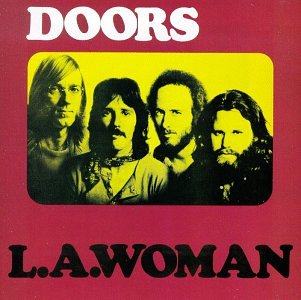
Jim Morrison got the name for his band from a line attributed to one of his major poetic influences, William Blake: “If the doors of perception were cleansed everything would appear to man as it is, infinite.” It was this sentiment that drove the Doors sound and mythos. Through the simplistic, moody, bluesy, and sometimes psychedelic sound created by keyboardist Ray Manzarek, drummer John Densmore, and guitarist Robby Krieger, and the voice and words of rock ‘n roll poet Jim Morrison, the band created doors of perception between darkness and enlightenment…gateways through which artists continue to follow and flourish in. Appreciating Morrison as both a singer and a true poet is a lot easier once the tired leather-pants-clad rock star image is set aside. It was an image that Morrison himself discarded in the midst of the Doors popularity (as can be seen by the beefy bearded Morrison featured on the cover of his last album with the Doors L.A. Woman), a media monster that has become far bigger than the man himself, as well as his work. But it's the work that speaks for itself.
Morrison had a wide range of artistic influences. He looked to a wide range of poets from William Blake to Allen Ginsberg for lyrical inspiration, and drew from the philosophy of Friedrich Nietzsche and the grotesque imagery of the work of Dutch painter Hieronymus Bosch for the dark landscapes he conceptualized in songs like “The End” and “Riders of the Storm”. What Morrison shared in common with his east-coast counterpart, the Velvet Underground’s Lou Reed, was that he took rock ‘n roll seriously as an art form, which in turn manifested itself through the oeuvre of his lyrics (simultaneously adult and childish, though some would call it infantile). While John Lennon and Paul McCartney were writing about love and adolescence, Jim Morrison was writing about sex and death, creating a dangerous stage persona (now infamously known as the Lizard King) to match his words. Julian Beck’s New York based experimental theatre group, The Living Theatre, directly inspired Morrison’s confrontational approach to his audience, revealing from yet another artistic angle that Morrison’s work is part of a long and integral tradition of art, performance and poetry. On the night of a concert, just before the Doors were about to go on stage, a DJ introduced them as “Jim Morrison and the Doors”. As the DJ passed them coming down from the stage, Morrison stopped him and said, “Uh-uh, man, you go back up there and introduce us right. It’s THE DOORS, the name of the band is THE DOORS.” Jim Morrison, though eventually a victim to the excess of his own stardom, was very aware that he was nothing on his own as a musical entity. He knew better than anyone what Jerry Hopkins poignantly described in No One Here Gets Out Alive, that “to get the best view of Jim Morrison you must go through the Doors, and the most important thing to remember about the Doors is that they were a band and each individual formed a side of the diamond that was the whole.” If Jim Morrison was the word and the image, the other three sides of the diamond were the music, each deserving far more appreciation for their contribution to rock music than they have received. It could be argued that Ray Maznarek was the architect of the Doors. It was he who really had the drive and knowhow to form the band after encouraging Morrison to step up to the mike after hearing him sing one of his songs unaccompanied on the beach while both of them were students at UCLA film school. It could also be argued that Manzarek’s keyboards are every bit as signature to the Doors sound as Morrison’s vocals and lyrics. The Doors never had an actual bass player in their line-up, opting instead for Manzarek to pull double duty, playing the keyboard with his right hand, and a keyboard bass with his left. It is the bizarre, often circus-like sound of Manzarek’s playing that pushes the Doors sound into a beautiful realm of the weird.  At their best, the Doors leave plenty of space open, and execute the balance between space and sound through a signature precision and simplicity. At the heart of this precision are the Latin jazz beats of John Densmore’s drumming, keeping the Doors sound tight while allowing it to go down smooth. He is greatly aided by the Elvis and L.A. Surf rock-influenced guitar of Robby Krieger. Morrison often lamented the fact that Krieger was not appreciated as one of the great guitarists of his generation, and Krieger’s name is seldom dropped in the same sentence as Jimi Hendrix, Pete Townshend, Keith Richards, or Eric Clapton. But as a guitarist, his rightful place right alongside his ‘60’s guitar-god contemporaries is unavoidable. And as a songwriter, his importance in the Doors is undeniable—having written (or co-written with Morrison) many of the Doors biggest radio hits including “Light My Fire”, “Touch Me” and “Love Her Madly”. It’s been my opinion for a while now that the Velvet Underground were the most important band of the ‘60’s (and if you haven't figured out that the Velvet Underground are more important to music than the Beatles, get with the program). It has a lot to do with the way the music of the Velvets continues to challenge society’s consciousness and open new doors of perception. This is the same reason I present for your consideration the Doors as one of the purest and most timeless acts in Rock history. If the cereal image of the band and their shaman front-man is thrown away, the work will speak for itself, and the music and words of the Doors WILL cleanse, and perhaps create new doors of perception to the willing listener. Recommended Doors Albums: The Doors (1967) Strange Days (1967) Waiting for the Sun (1968) L.A. Woman (1971) Absolute Best Doors Tracks: “Break On Through (To the Other Side)” “The End” “When the Music’s Over” “Five to One” “Peace Frog” “L.A. Woman” “Riders of the Storm” Reccomended Poetry by Jim Morrison: The Lords and The New Creatures Recommended Further Reading: No One Here Gets Out Alive: The Biography of Jim Morrsion by Jerry Hopkins and Danny Sugerman